BHULLARAI PIND
Researching the lost heritage of this Punjabi village
Location: Bhullarai Village, Phagwara Tehsil, Kapurthala District, Punjab – 144401, India
If you’ve found this page, you likely have a personal connection with the village of Bhullarai, Punjab. So, Vaheguru Ji Ka Khalsa, Vaheguru Ji Ki Fateh, Namaste and Salaam Alaykum my fellow brethren of the village.
Purpose
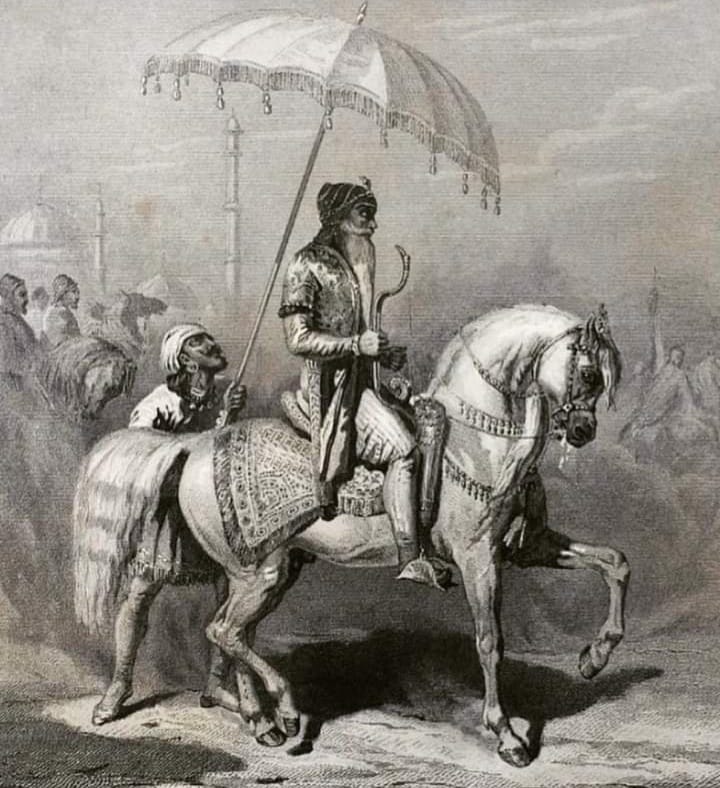
This page has been created for one purpose – to research and notarise the historic connection between village ancestry and Maharaja Ranjit Singh, The Lion of Punjab.
Background
My name is Deepak Singh Udassi and I live in the UK. I have been lucky to visit my beautiful ancestral home of Bhullarai several times since childhood. On each visit I’d enjoy hearing of my family’s direct link with the Maharaja, told by family members and village elders. But information has always been scrappy; snippets of stories, echoes of events that once were and half-facts passed down in the oral tradition–a tradition growing quickly fainter with the passing of time and people. As a result, I have been left with two things: the outline of a remarkable story of a historic encounter between my forefather and Maharaja Ranjit Singh, and a sincere thirst for knowledge to fill in the blanks and reconstruct historic events for posterity. Please note that I am not an academic, historian or researcher. I’m just an ordinary chap from the village of Bhullarai, who now lives in Britain, with a hunger to codify and preserve an accurate historical record for generations to come. So, here’s what I know.
The story (as far as it is known)
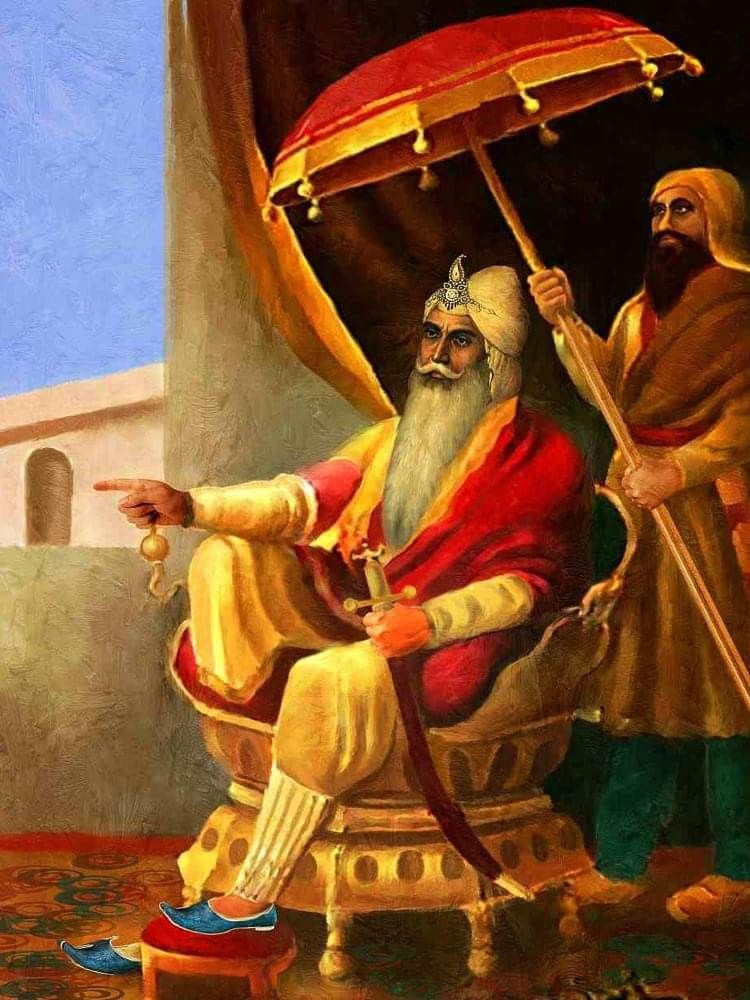
Sometime between April-1801 and June-1839, Maharaja Ranjit Singh led a party hunting tigers in the (then) jungle around Bhullarai, when he lost his way. He sent out his General to find the trail. The General followed the sound of running water from a nearby groundwater well (kuaan) and came upon a slender man in a mud hut tending his lot. The General brought the Maharaja to this place. The slender man fed and watered the Maharaja with whatever meagre rations available. The Maharaja rested on a manja in the shade – respite from the unforgiving heat of day. Upon waking from rest, the Maharaja thanked the man for helping him, but not before asking why he did so. The man replied (in rough), ‘I am Sikh and it is my duty to help those in need’.
So pleased was the Maharaja upon hearing this, that under some form of Jagirdari system, he bestowed largesse of maafi zameen to the man, and commanded he preach Sikhi to others, so they too would be of strong character. The man obeyed and opened a Dharamsala (a school of Sikh learning) close by, around which the village developed.
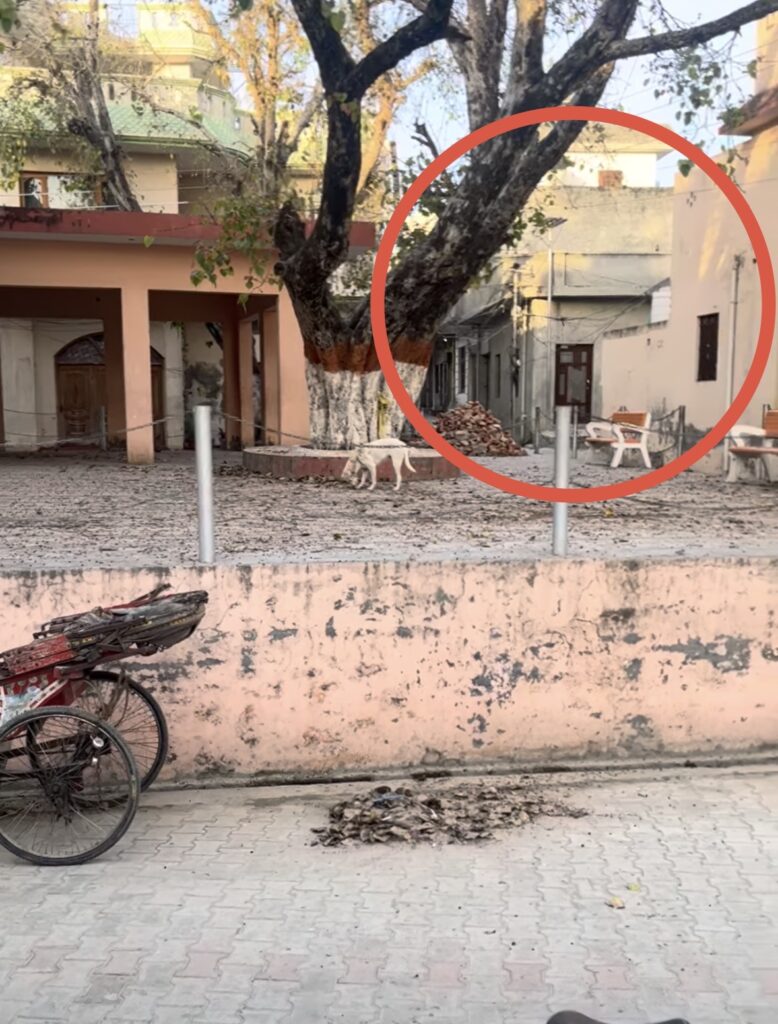
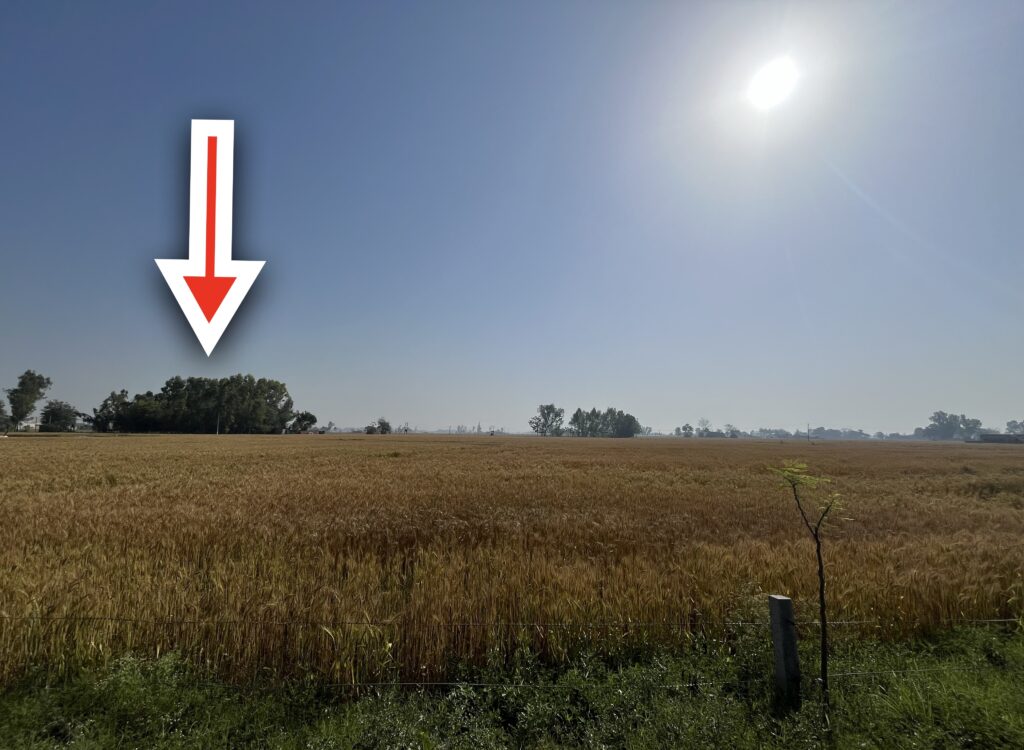
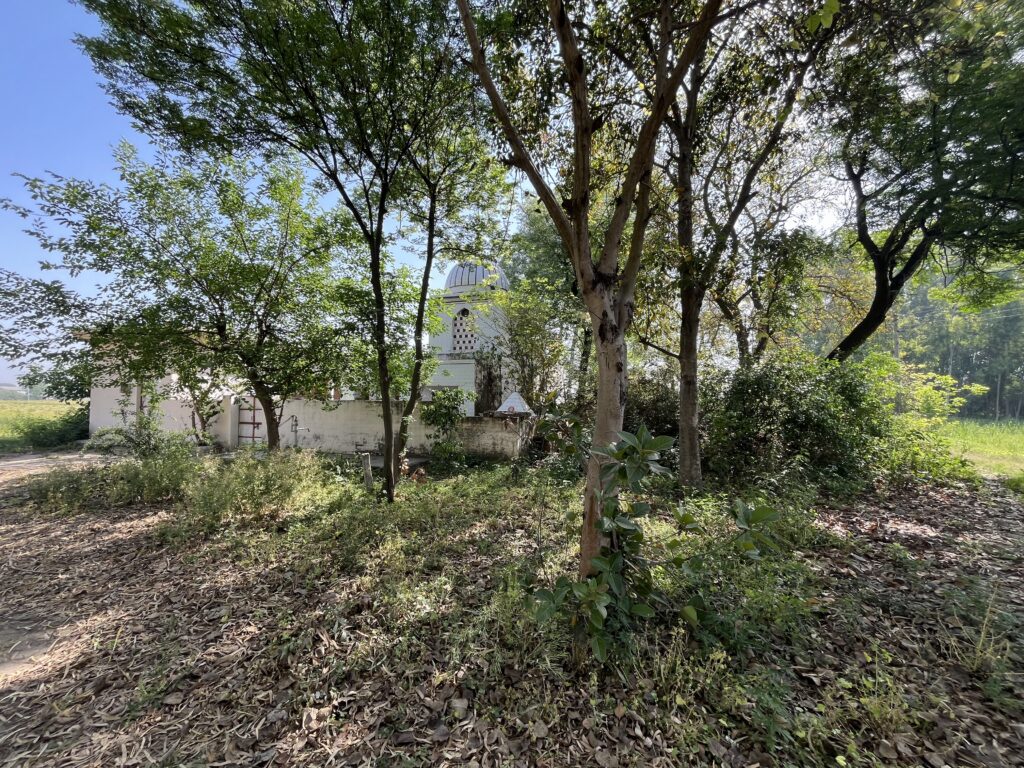
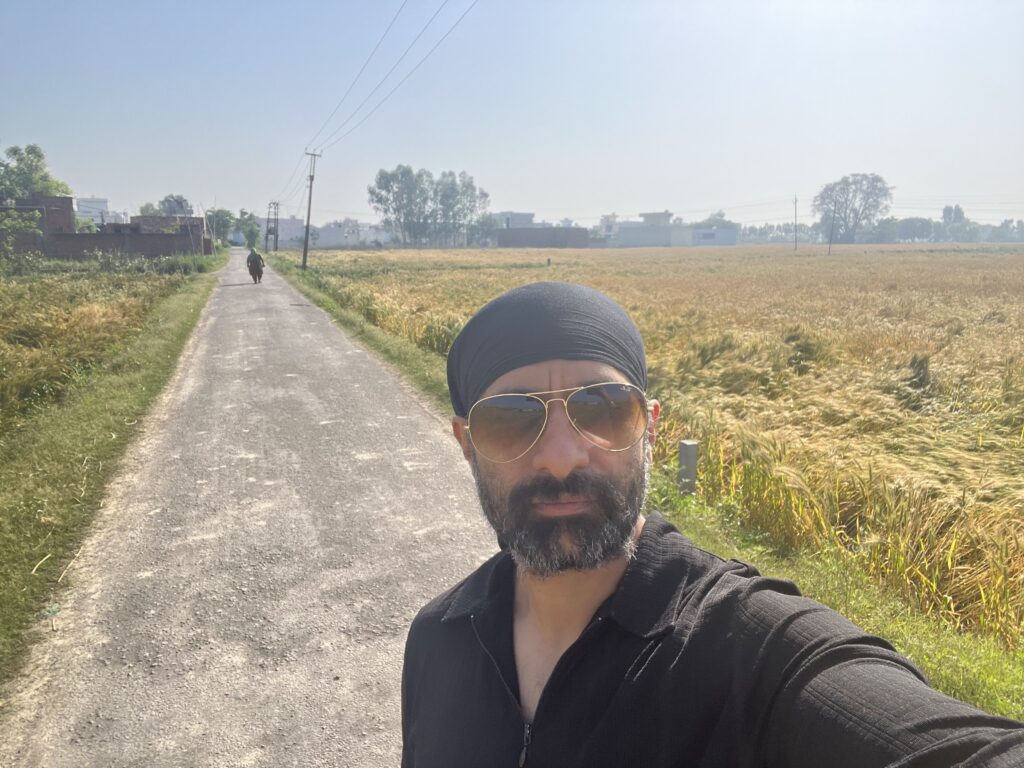
The slender man in the mud hut was my forefather, some 6-9 generations removed and of the lineage of Mahants entrusted preserve, protect and propagate Sikhi through the institutions of Dharamsalas. The pictures show the supposed location of the encounter. A Samad (ancestral shrine) was built in the vicinity of this spot, where the ashes of said forefathers are preserved. It is unclear whether the Samad was built here to mark the spot of the encounter, of just coincidence.
Further facts about Maharaja Ranjit Singh and Bhullarai
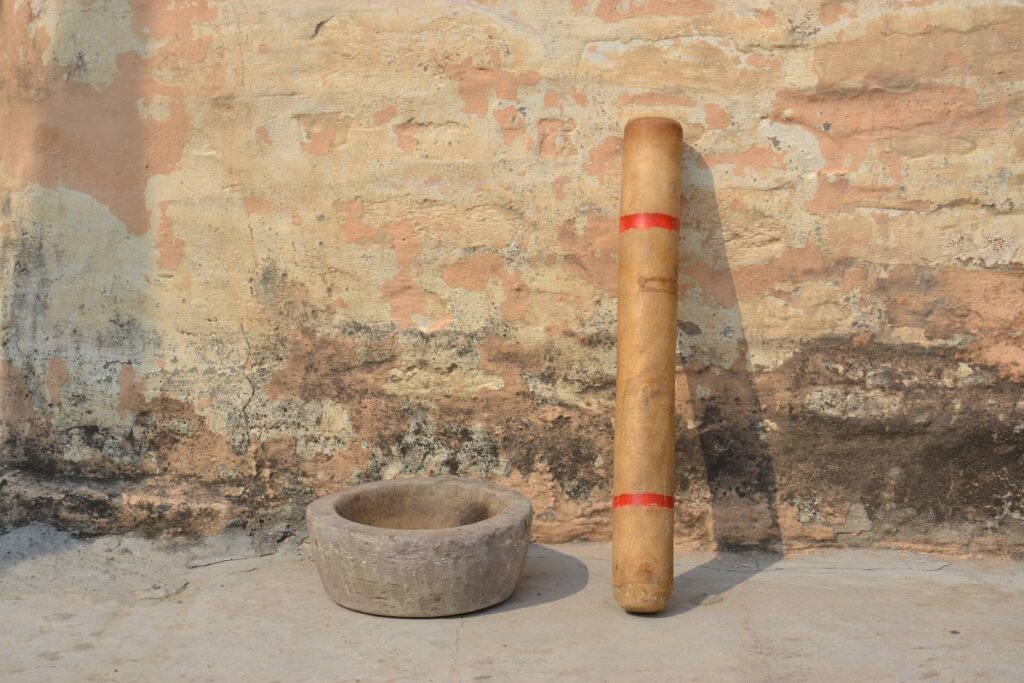
The Maharaj also bestowed a gift to the family, of a large 5-foot Kundi Sotta (large pestle and mortar similar to the one pictured below). It still exists today, although worn down to 2-foot, owing to regular use through generations.
How you can help
Bhullrai is an ancient village with a direct and traceable connection back to the Sikh Empire. The royal encounter is a remarkable event worthy of its place in history. If you have any information that may help connect the dots, fill in the gaps or contribute in any way to our understanding of this historic event, please come forward.
Reconstructing the history will unlock further priceless insights to the workings of the Sikh Empire and life and times of Shere-e-Punjab Maharaja Ranjit Singh.
BHULLARAI PIND
Researching the lost heritage of this Punjabi village
Location: Bhullarai Village, Phagwara Tehsil, Kapurthala District, Punjab – 144401, India
If you’ve found this page, you likely have a personal connection with the village of Bhullarai, Punjab. So, Vaheguru Ji Ka Khalsa, Vaheguru Ji Ki Fateh, Namaste and Salaam Alaykum my fellow brethren of the village.
Purpose
This page has been created for one purpose – to research and notarise the historic connection between village ancestry and Maharaja Ranjit Singh, The Lion of Punjab.
Background
My name is Deepak Singh Udassi and I live in the UK. I have been lucky to visit my beautiful ancestral home of Bhullarai several times since childhood. On each visit I’d enjoy hearing of my family’s direct link with the Maharaja, told by family members and village elders. But information has always been scrappy; snippets of stories, echoes of events that once were and half-facts passed down in the oral tradition–a tradition growing quickly fainter with the passing of time and people. As a result, I have been left with two things: the outline of a remarkable story of a historic encounter between my forefather and Maharaja Ranjit Singh, and a sincere thirst for knowledge to fill in the blanks and reconstruct historic events for posterity. Please note that I am not an academic, historian or researcher. I’m just an ordinary chap from the village of Bhullarai, who now lives in Britain, with a hunger to codify and preserve an accurate historical record for generations to come. So, here’s what I know.
The story (as far as it is known)
Sometime between April-1801 and June-1839, Maharaja Ranjit Singh led a party hunting tigers in the (then) jungle around Bhullarai, when he lost his way. He sent out his General to find the trail. The General followed the sound of running water from a nearby groundwater well (kuaan) and came upon a slender man in a mud hut tending his lot. The General brought the Maharaja to this place. The slender man fed and watered the Maharaja with whatever meagre rations available. The Maharaja rested on a manja in the shade – respite from the unforgiving heat of day. Upon waking from rest, the Maharaja thanked the man for helping him, but not before asking why he did so. The man replied (in rough), ‘I am Sikh and it is my duty to help those in need’.
So pleased was the Maharaja upon hearing this, that under some form of Jagirdari system, he bestowed largesse of maafi zameen to the man, and commanded he preach Sikhi to others, so they too would be of strong character. The man obeyed and opened a Dharamsala (a school of Sikh learning) close by, around which the village developed.
The slender man in the mud hut was my forefather, some 6-9 generations removed and of the lineage of Mahants entrusted preserve, protect and propagate Sikhi through the institutions of Dharamsalas. The pictures show the supposed location of the encounter. A Samad (ancestral shrine) was built in the vicinity of this spot, where the ashes of said forefathers are preserved. It is unclear whether the Samad was built here to mark the spot of the encounter, of just coincidence.
Further facts about Maharaja Ranjit Singh and Bhullarai
The Maharaj also bestowed a gift to the family, of a large 5-foot Kundi Sotta (large pestle and mortar similar to the one pictured below). It still exists today, although worn down to 2-foot, owing to regular use through generations.
How you can help
Bhullrai is an ancient village with a direct and traceable connection back to the Sikh Empire. The royal encounter is a remarkable event worthy of its place in history. If you have any information that may help connect the dots, fill in the gaps or contribute in any way to our understanding of this historic event, please come forward.
Reconstructing the history will unlock further priceless insights to the workings of the Sikh Empire and life and times of Shere-e-Punjab Maharaja Ranjit Singh.